Silicone + plastic
Flexible silicone overmolded on rigid plastic structures. Compatibility, retention and assembly are reviewed together, because not every plastic and silicone combination will bond directly.
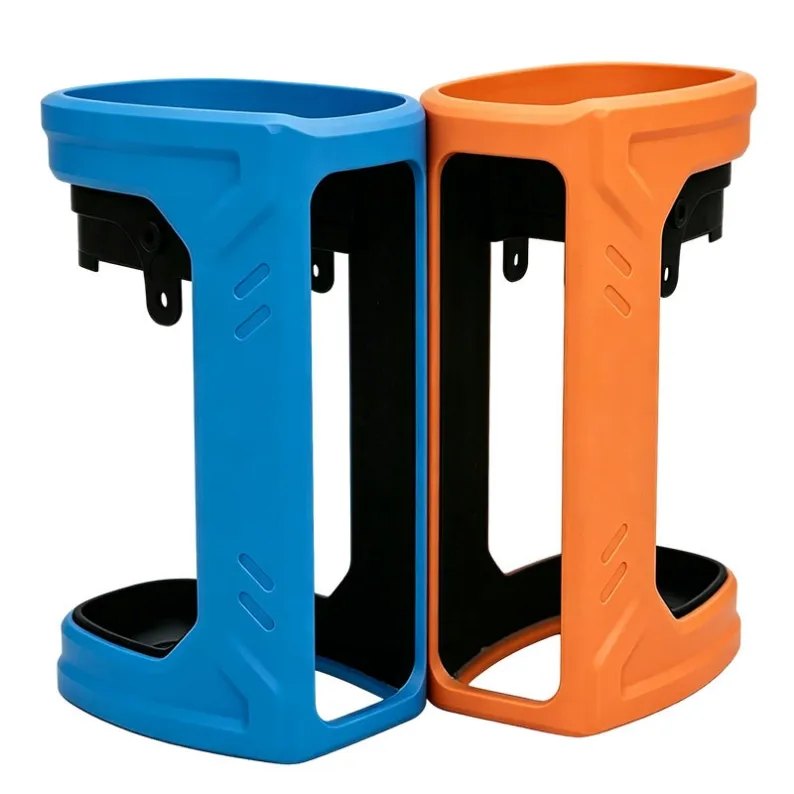
Where plastic and silicone combine
When it fits
Soft-Touch Grip Areas
Suitable for products that require flexible grip or improved surface feel on a rigid plastic body.
Protective Overmolded Surfaces
Suitable where silicone is used to protect edges, contact areas or exposed product surfaces.
Sealing Interfaces
Suitable where silicone is integrated into a plastic structure for sealing or controlled contact.
Custom Product Housings
Suitable for housings and structural parts requiring both rigid plastic support and flexible silicone areas.
Integrated Functional Features
Suitable where silicone forms a functional feature such as grip, cushion, sealing edge or flexible interface.
Repeat Multi-Material Production
Suitable for approved silicone + plastic structures requiring consistent repeat OEM/ODM production.
Project inputs
The product structure should be reviewed before tooling to confirm geometry, interface, substrate material, silicone material and overmolding feasibility.
2D Drawing
Sketches or 2D drawings with the plastic structure and silicone areas.
3D / CAD File
CAD files of the substrate and overmold geometry.
Physical Sample
An existing part used as the structure and interface reference.
Plastic Housing / Substrate
The plastic part or housing that will be overmolded.
Silicone Area Definition
Where silicone should cover, seal or grip.
Material Information
Substrate and silicone expectations reviewed together.
Dimensions & Tolerances
Key dimensions and tolerance stack-up across materials.
Functional Requirement
Sealing, grip, protection or contact function defined per use.
Assembly Requirement
How the overmolded part fits the final assembly.
Target Market
Market context reviewed for material and finish requirements.
Material compatibility
Material compatibility is reviewed according to substrate type, silicone grade, interface design, bonding method and project function. Not every plastic and silicone combination will bond directly. Depending on the project, mechanical retention, surface treatment, primer or other bonding approaches may be required.
ABS
Common substrate for grip and protective overmolding.
PC
Used where stiffness and clarity are required.
PP
Reviewed for bonding or mechanical retention.
PA / Nylon
Higher-strength substrates reviewed for interface design.
Other Engineering Plastics
Reviewed per substrate and application.
Compatible Silicone / LSR
Silicone or LSR grade selected for the substrate and function.
Interface & bonding
The interface between plastic and silicone should be reviewed before mold development to reduce separation, leakage, flash and fit issues.
Bonding Area
Bonding area defined and sized for the required retention.
Mechanical Retention
Holes, grooves or through-features planned where direct bonding is not suitable.
Shut-Off Design
Shut-off areas defined to control silicone flow and flash.
Undercuts / Locking Features
Locking features planned for mechanical retention.
Contact Surface
Contact surfaces reviewed for feel and function.
Overmold Thickness
Overmold thickness balanced for coverage and cure.
Material Transition
Transition between rigid and flexible areas defined.
Assembly Interface
How the part fits the final assembly reviewed.
Design before tooling
Plastic Part Geometry
Substrate geometry reviewed for overmolding.
Silicone Overmold Geometry
Overmold shapes and coverage planned.
Draft & Release
Draft angles planned for clean demolding.
Parting Line
Parting line placement agreed before tooling.
Shut-Off Area
Shut-off area defined to control flow and flash.
Flash Control
Flash allowance and trimming reviewed per surface.
Wall Thickness
Wall sections planned for both materials.
Tolerance Stack-Up
Tolerance stack-up across plastic and silicone reviewed.
Insert Positioning
Substrate positioned and supported in the mold.
Demolding Feasibility
Demolding sequence reviewed before tooling.
Tooling & sampling
Each step is confirmed per project. Dedicated tooling and sampling support is described on the Tooling & Sampling capability page.
Drawing / Structure Review
The drawing and plastic structure are reviewed for overmolding.
Material & Interface Review
Substrate, silicone and interface approach are reviewed.
Mold Structure Review
Mold structure, shut-off and positioning are reviewed.
Tooling Development
Overmolding tooling is built around the confirmed design.
First Sample
First samples are molded with the actual substrate.
Bonding / Fit Review
Bonding or retention and fit are reviewed on samples.
Dimension & Function Check
Samples are checked for dimensions and function.
Customer Approval
The approved sample becomes the production reference.
Production
Production follows the approved sample and confirmed material, interface and project specifications.
Plastic Substrate Preparation
Substrates are prepared per the agreed bonding approach.
Insert / Positioning
Substrates are positioned and supported in the mold.
Silicone Overmolding
Silicone is overmolded per the agreed parameters.
Curing
Parts are cured to the confirmed state before handling.
Demolding
Parts are removed and handled per the agreed method.
Trimming / Finishing
Flash is trimmed and surfaces finished per the agreed criteria.
Inspection
Parts are checked against the approved sample.
Assembly if Required
Multi-part products assembled per project scope.
Packaging
Parts packed per the agreed specification.
Quality focus
Checks are aligned with the approved sample and agreed criteria — see the Quality Control capability.
Bond Strength / Retention
Bonding or mechanical retention reviewed on samples.
Silicone Coverage
Coverage matches the confirmed overmold geometry.
Flash Control
Flash kept within the agreed allowance.
Shut-Off Quality
Shut-off areas clean per the agreed criteria.
Dimensions
Dimensions checked against the approved drawing.
Overmold Thickness
Overmold thickness matches the confirmed design.
Surface Finish
Surface quality consistent across batches.
Insert Position
Substrate positioned and retained as designed.
Assembly Fit
Parts assemble into the product as intended.
Repeat Production Consistency
Repeat orders produced against the approved sample.
Application directions
Typical directions where silicone + plastic overmolding is applied.
Consumer Product Housings
Rigid housings with flexible silicone areas.
Drinkware & Travel Accessories
Grip and protective overmolding for travel products.
Electronics & Device Components
Overmolded components around devices and connectors.
Beauty & Personal-Care Components
Soft-touch components for beauty and personal care.
Protective Product Structures
Protective structures combining rigid and flexible areas.
Branded / Multi-Material Products
Multi-material products developed for brand programs.
Frequently asked questions
What plastic materials can be used for silicone overmolding?
Common substrates include ABS, PC, PP and PA / nylon; other engineering plastics are reviewed per project.
Does silicone bond directly to every plastic?
No. Some combinations bond directly while others need mechanical retention, surface treatment or primer; the approach is selected per substrate and function.
Can you develop an overmolded part from a drawing or sample?
Yes. Projects can start from drawings, CAD files or samples; the structure and interface are reviewed before tooling.
Can silicone hardness and color be customized?
Yes. Hardness and color are selected per the application and confirmed on samples.
How do you control the silicone-to-plastic interface?
Bonding areas, mechanical retention, shut-off design and overmold thickness are defined during the design review and checked on samples.
Can mechanical retention be used if direct bonding is not suitable?
Yes. Undercuts, holes and locking features can be designed into the substrate so the silicone is mechanically retained.
How do you confirm fit and bonding before production?
First samples are reviewed for bonding or retention, fit, dimensions and appearance before customer approval.
What information is needed for quotation?
The plastic substrate details, drawings or samples, silicone area definition, hardness and color expectations, quantities and packaging expectations.
Where to go next
Combining plastic and silicone?
Send the substrate and silicone geometry. We review bonding and retention, then reply with the next steps.