Multi-material product development
Products combining silicone with plastic, metal, straps and textiles — developed as one product so structure, bonding and assembly are decided together.
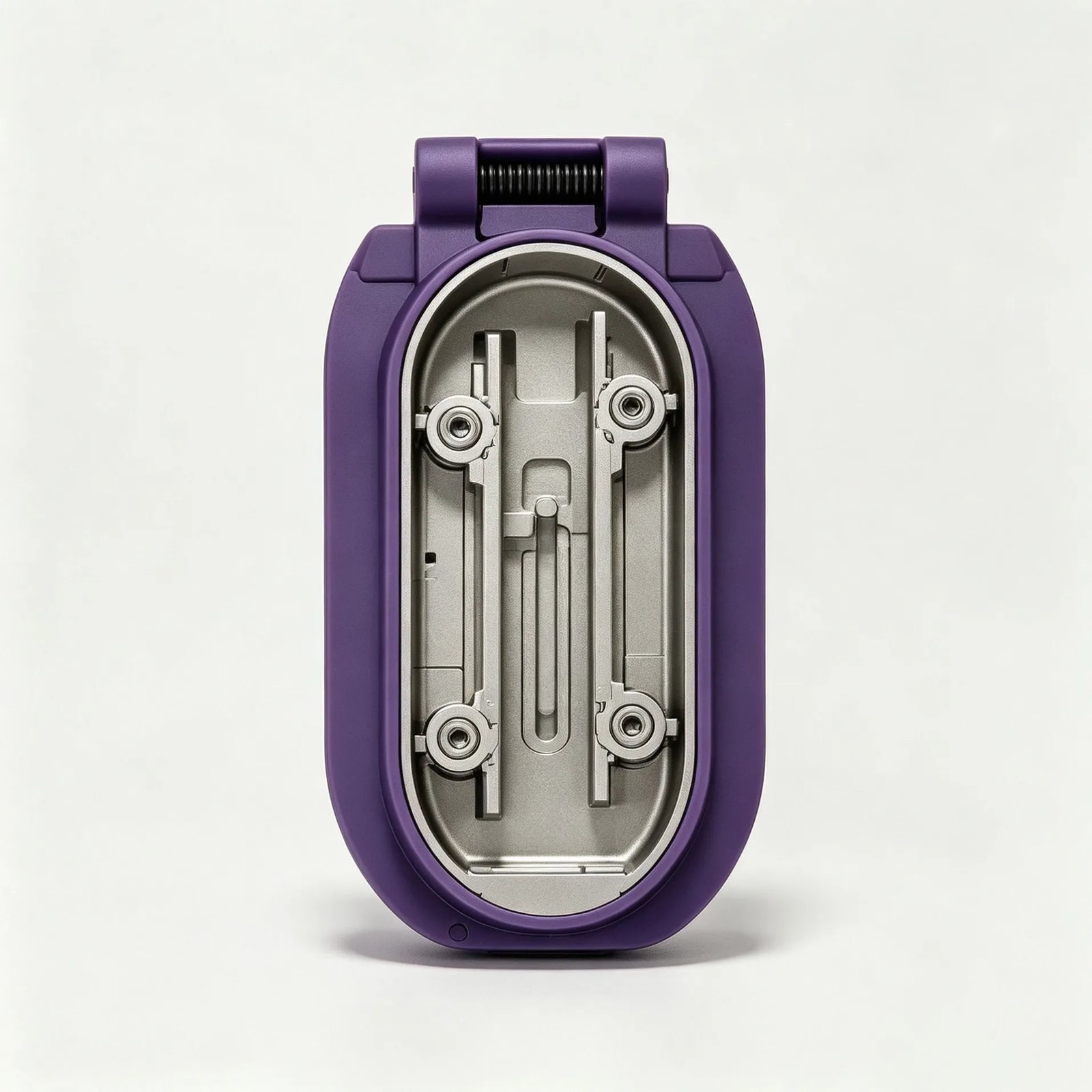
One product, several materials
When it fits
Functional Product Structures
Suitable when one material alone cannot provide all required product functions.
Soft + Rigid Combinations
Suitable when flexible silicone must be combined with a rigid plastic or metal structure.
Hardware Integration
Suitable when the product includes clips, rings, buckles, fasteners or other hardware.
Strap / Textile Components
Suitable for products combining molded parts with straps, webbing, textile or carry features.
Branded Consumer Products
Suitable for custom products that require multiple materials, finishes and brand-specific details.
Repeat Assembled Programs
Suitable for repeat OEM/ODM products requiring coordinated components, assembly and packaging.
Project inputs
The complete product structure should be reviewed before tooling so that material combinations, interfaces, component sourcing and assembly requirements are confirmed early.
2D Drawing
Sketches or 2D drawings with the product structure.
3D / CAD File
CAD files for geometry and interface review.
Physical Sample
An existing part or assembly used as the reference.
Product Concept
A concept described or sketched for structure review.
Reference Product
A reference item showing the intended structure.
Component List
Known components and materials listed for review.
Material Requirement
Material expectations per component.
Assembly Requirement
Assembly scope and sequence expectations.
Packaging Requirement
Packaging and kitting expectations per program.
Target Market
Market context reviewed for materials and finish.
Material combinations
Material selection depends on product function, structure, contact surfaces, finish, assembly and target-market requirements. Not every material pair bonds or molds together directly; the connection approach is reviewed per combination.
Silicone + Plastic
Flexible silicone over or around rigid plastic structures.
Silicone + Metal
Silicone over metal inserts and hardware.
Silicone + Strap / Webbing
Molded parts integrated with straps and webbing.
Silicone + Textile
Silicone combined with textile contact surfaces.
Silicone + Hardware
Clips, rings, buckles and fasteners integrated.
Multiple Molded / Assembled Components
Several molded parts combined into one product.
Structure & interface
Multi-material products should be reviewed as a complete system so that interfaces, fit and assembly are resolved before tooling and production.
Component Fit
How components fit together reviewed as one system.
Interface Geometry
Interfaces between materials defined early.
Mechanical Connection
Connections planned for strength and assembly.
Bonding / Retention Method
Bonding or retention approach selected per pair.
Tolerance Stack-Up
Stack-up reviewed across all components.
Insert Position
Inserts located and held during molding.
Assembly Sequence
Assembly order confirmed during sampling.
Service / Replacement Requirements
Serviceable parts reviewed where required.
Before tooling
Product Architecture
Overall structure reviewed as one system.
Material Compatibility
Material pairs reviewed for function and connection.
Part Geometry
Each part geometry reviewed for its process.
Wall Thickness
Wall sections planned per material.
Tolerance
Tolerances agreed across components.
Fastening Method
Fastening approach selected per connection.
Overmolding Requirement
Where overmolding applies in the structure.
Assembly Access
Assembly access reviewed for feasibility.
Surface Finish
Finish reviewed per material and contact area.
Packaging Constraints
Packaging reviewed for size and protection.
Tooling & components
Each step is confirmed per project. Dedicated tooling and sampling support is described on the Tooling & Sampling capability page.
Product Structure Review
The complete structure is reviewed before tooling.
Material / Component Confirmation
Materials and components confirmed per part.
Tooling Strategy
Tooling strategy set across all molded parts.
Individual Part Development
Each molded part developed with its own tooling.
First Samples
First samples molded for every molded component.
Fit / Interface Review
Fit and interfaces reviewed across components.
Assembly Trial
Parts assembled as a trial to confirm the sequence.
Customer Approval
The approved set becomes the production reference.
Assembly
Assembly steps should be confirmed during sampling so that fit, sequence, labor requirements and quality checkpoints are understood before repeat production.
Component Preparation
Components prepared and checked before assembly.
Part Matching
Molded parts matched per the confirmed design.
Mechanical Assembly
Parts assembled mechanically per the design.
Bonding / Adhesive where applicable
Bonding steps reviewed where the design requires.
Hardware Installation
Hardware installed per the confirmed list.
Strap / Textile Integration
Straps and textile integrated per the design.
Functional Check
Assembled products checked for function.
Packaging Preparation
Assembled products packed per the program.
Repeat production
Approved samples, component specifications and assembly requirements are used as the reference for repeat production.
Component Production
Molded components produced against approved samples.
Incoming Component Check
Incoming components checked per the agreed criteria.
Sub-Assembly
Sub-assemblies built per the confirmed sequence.
Final Assembly
Final assembly completed and checked.
Function / Fit Check
Function and fit checked on finished products.
Quality Inspection
Inspection against the approved sample.
Packaging
Products packed per the agreed specification.
Shipment Preparation
Shipments prepared per the program.
Quality focus
Checks across components, interfaces and assembly keep the approved set reliable as the production reference — see the Quality Control capability.
Component Consistency
Components consistent across batches.
Material Match
Materials match the confirmed combinations.
Color Coordination
Colors coordinated across materials.
Interface Fit
Interfaces fit as approved on samples.
Tolerance Stack-Up
Stack-up held across all components.
Assembly Quality
Assembly follows the confirmed sequence.
Hardware Position
Hardware positioned per the design.
Surface Finish
Finishes consistent across materials.
Functional Performance
Function checked against requirements.
Packaging Protection
Products protected through packing and shipment.
Repeat Production Consistency
Repeat orders produced against the approved reference.
Project directions
Typical directions where multi-material development is applied.
Branded Consumer Accessories
Multi-material accessories developed for brand programs.
Travel & Carry Products
Carry products combining molded parts with straps.
Device / Protective Products
Protective structures around devices.
Drinkware Accessories
Sleeves, holders and accessories for drinkware.
Character / Merchandise Products
Character products combining materials and details.
Technical Multi-Component Products
Technical products with multiple functional components.
Frequently asked questions
Can you develop a product that combines silicone with several other materials?
Yes. Products combining silicone with plastic, metal, hardware, straps or textile are reviewed as one structure covering materials, interfaces, tooling and assembly.
Can silicone be combined with plastic, metal and straps in one product?
Yes. Multiple material combinations can be integrated in one product; fit, connection and assembly are confirmed during sampling.
How do you review component fit and assembly requirements?
Fit, interface geometry, tolerance stack-up and assembly sequence are reviewed as a complete system before tooling and confirmed on samples.
Can you develop multiple parts and assemble them before shipment?
Yes. Individual parts can be developed, produced and assembled, with kitting and packaging per program.
Can custom hardware or textile components be integrated?
Yes. Hardware, straps and textile components can be integrated where they fit the product structure and program.
How do you manage tolerance between different components?
Tolerance stack-up is reviewed across all components during the structure review and confirmed on samples.
Can custom packaging and kitting be included?
Yes. Packaging, kitting and shipment preparation can be included; the scope is confirmed per program.
What information is needed for quotation?
The product concept, drawings or samples, a component list, material and assembly expectations, quantities and packaging requirements.
Where to go next
Developing a multi-material product?
Send the structure and the materials involved. We review the interfaces and assembly route, then reply with the next steps.