Silicone overmolding
Silicone bonded onto plastic, metal and engineered inserts for sealing, grip, protection and soft-touch surfaces — with bonding and retention reviewed before tooling.
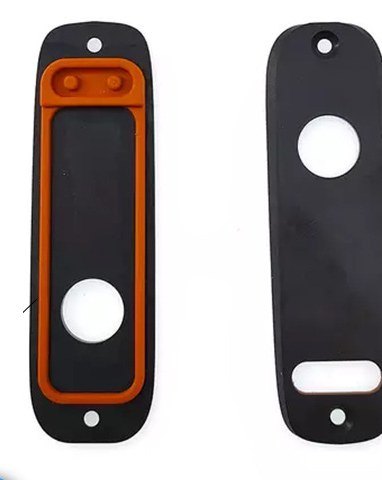
Where overmolding is the answer
What we overmold
Explore substrate combinations, insert molding and functional applications. Material compatibility and tooling requirements are reviewed during DFM.
Plastic Substrate Overmolding
Silicone overmolded onto plastic housings and structures for sealing, grip and protection.
Metal Insert Overmolding
Silicone bonded around metal inserts and hardware for mounting and durable assemblies.
Sealing & Soft-Touch Surfaces
Sealing beads, gasket surfaces and soft-touch areas integrated into the overmolded part.
Engineering considerations
Successful overmolding depends on more than material choice. Substrate compatibility, insert positioning, local shut-offs, gate location, silicone flow, bonding method and molding pressure all affect part quality.
Substrate compatibility
Substrate compatibility depends on grade, surface condition and bonding method — reviewed at DFM.
Mechanical locking / bonding strategy
Primer, self-bonding LSR or mechanical locking is selected based on substrate and application.
Gate and flow path
Gate and flow path design ensures silicone fills around the insert without air traps.
Shut-off design
Shut-off geometry keeps silicone off critical contact or sealing surfaces.
Insert positioning
Insert positioning and support prevent shift during injection.
Flash control around inserts and sealing interfaces
Flash control around inserts and sealing surfaces is managed through shut-off design and pressure.
Demolding and part protection
Demolding and part protection prevent damage during removal from the mold.
Process
Early DFM review addresses material, bonding and tooling risks. Trial molding and validation confirm part performance before mass production.
DFM Review
Bond area, shut-offs, draft and substrate compatibility are reviewed before tooling.
Bond & Shut-Off Validation
Bond strength and shut-off quality are confirmed on samples, with the bonding route selected by substrate.
Stable Production
Process parameters are locked after approval to keep bond quality stable across batches.
Engineering notes from production programmes
- Soft-touch programmes: surface finish and feel are approved on samples and held across repeat batches.
Frequently asked questions
Can silicone be overmolded onto plastic?
Many plastics can be overmolded with silicone, though not every plastic bonds directly with silicone. Substrate compatibility, surface preparation and mechanical retention options are evaluated at DFM to define a reliable approach for your specific material.
Can silicone be overmolded onto metal?
Yes. Metal inserts are commonly overmolded with silicone for structural and sealing applications. Metal surface condition, insert positioning and shut-off design are the critical factors reviewed at DFM.
Do you use primer or mechanical locking?
We evaluate self-adhesive silicone grades, suitable surface preparation or primers, and mechanical retention based on the substrate and application. These approaches can also be combined. The strategy is selected at DFM and validated through sampling.
How do you prevent flash around inserts?
Flash control around inserts and sealing interfaces is engineered into the tool: local shut-off design, insert positioning, gate and flow planning and molding pressure control are reviewed as a system before tooling.
Can you review our CAD before tooling?
Yes. Send your CAD file, drawing or sample and we will review the manufacturing route, bonding strategy and critical sealing areas before quotation.
Who owns the mold?
Custom tooling is project-specific. Tool ownership, maintenance, storage and transfer terms are confirmed in the quotation or tooling agreement.
Can you support pilot production?
Yes. Pilot batches can run after validation to confirm the process before mass production.
Where to go next
Have a part that needs bonding?
Send the substrate and silicone geometry. We review bonding and the manufacturing route, and reply with the next steps.