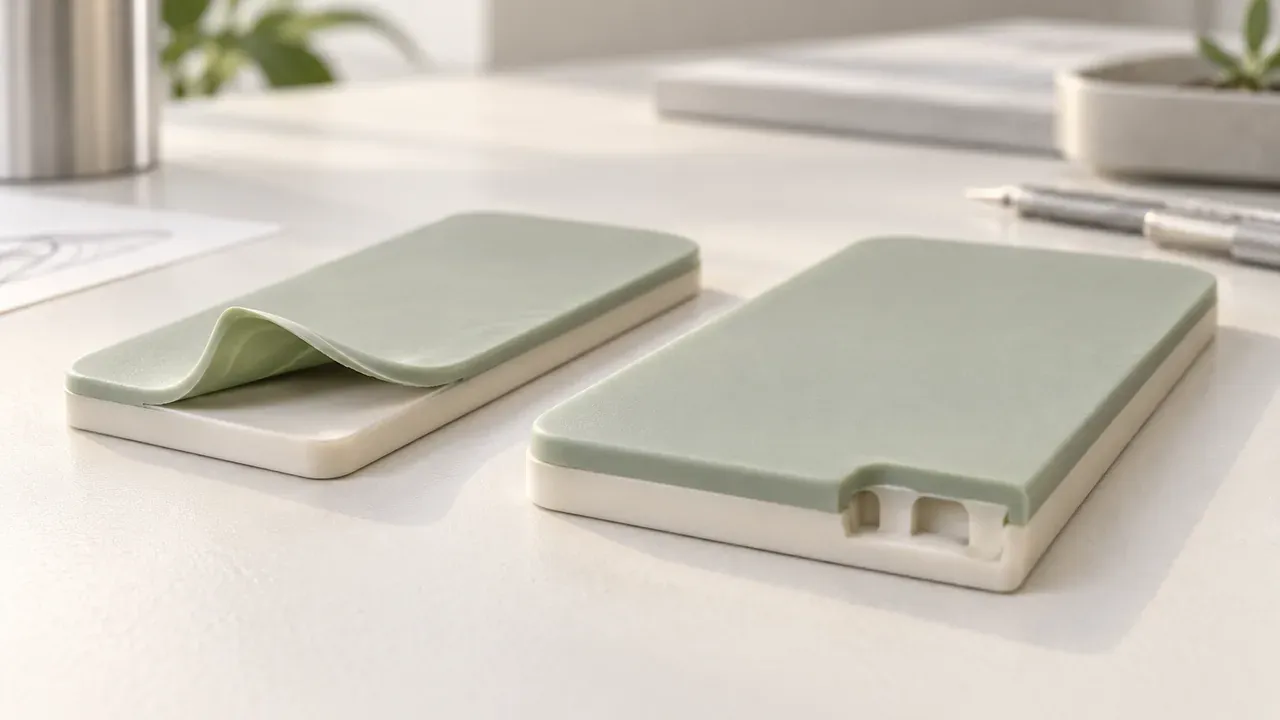
Delamination is one of the most common failure modes in silicone overmolding. The silicone may look properly bonded after molding but begin lifting after repeated flexing, water exposure, heat cycling, chemical contact or long-term use.
1. Confirm substrate compatibility
For plastics, resin family, grade, fillers and heat stability matter. For metals, alloy, plating, anodizing and surface coating matter.
2. Keep the bond surface clean
Oils, mold release, dust and handling contamination can reduce adhesion. A stable process should control cleaning, storage, handling and timing between treatment and molding.
3. Use the right retention strategy
Possible methods include direct chemical bonding, primer, plasma/surface activation and mechanical locking. For high-load applications, combining chemical bonding with mechanical retention can improve robustness.
4. Reduce peel loading
Bonded interfaces generally tolerate shear and compression better than repeated peel. DFM should review bond-edge geometry, wall thickness, local flexing and transition radii.
5. Control thermal mismatch
Silicone and rigid substrates expand differently with temperature. Repeated heating and cooling can generate stress at the interface.
6. Watch residual stress from molding
Uneven flow, poor insert support or excessive local compression can trap stress in the molded silicone.
7. Test for the real use case
Depending on the product, validation may include bending, water exposure, heat cycling, repeated flexing or cleaning chemicals.
Seeing lifting or delamination in an overmolded part? Send the drawing and substrate details for review.
Delamination is preventable at the design stage - the Functional & Overmolded Components group on our Electronics & Functional Components page shows typical overmolded structures, and the Overmolding section under Capabilities covers the process controls.