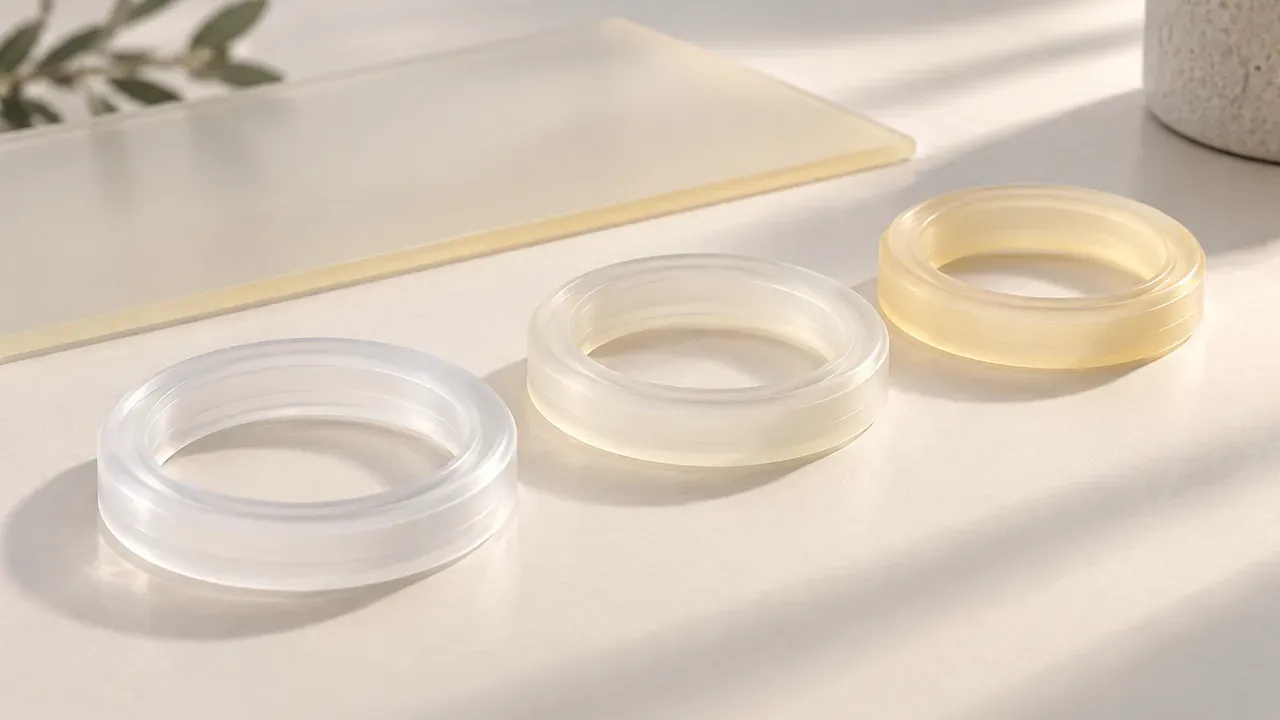
Clear and light-colored silicone is often selected for beauty devices, consumer electronics, healthcare products and visible interfaces because it looks clean and premium. Over time, some parts may develop yellowing, color shift, surface haze or reduced clarity.
1. UV exposure
Long-term UV exposure can change the appearance of light-colored silicone. Outdoor use, strong sunlight and certain indoor lighting conditions may accelerate visible aging.
2. Heat
Repeated exposure to elevated temperature can affect pigment stability, additives, residual volatiles and surface appearance.
3. Material formulation
Not all silicone grades age the same way. For appearance-critical applications, the material specification should consider long-term color stability, not only initial appearance.
4. Processing conditions
Curing conditions and post-processing can influence visual consistency. Poor control can lead to uneven color, surface variation or inconsistent clarity.
5. Cleaning and chemicals
Alcohols, oils, detergents and skin-care products can affect the appearance of some silicone parts over time.
6. Packaging and storage
Heat, light and packaging environment can influence how a product ages before use.
How to reduce the risk
define the expected environment
select material grade carefully
validate color under realistic conditions
review cleaning chemistry
agree visual standards before mass production
Developing an appearance-critical silicone part? Share the application and use environment for a material review.